
Investing in AI: The Best Stocks and ETFs to Profit from Artificial Intelligence in 2025
João and Rodrigo
12/11/2025
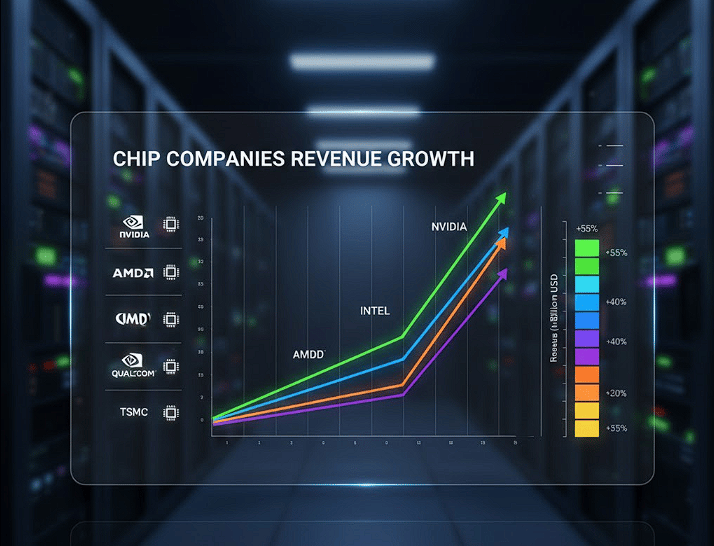
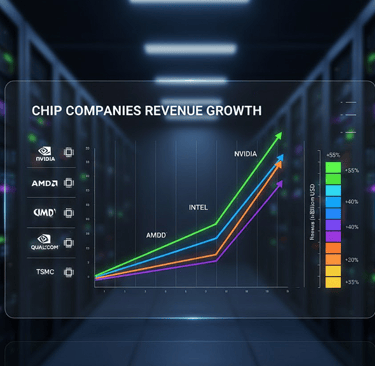
We are living through a technological revolution, and the driving force is Artificial Intelligence (AI). What began as a niche technology has exploded into a global economic force, reshaping everything from software development and healthcare to manufacturing and finance. For investors, investing in AI is no longer a futuristic bet; it is a necessity for capitalizing on the next wave of market growth.
In 2025, the AI investment landscape has matured, moving beyond basic applications into specialized sectors that promise exponential returns. But with thousands of companies claiming to use AI, how do you distinguish between hype and long-term opportunity?
This comprehensive guide breaks down the core components of the AI ecosystem. We will show you the three main ways to profit, providing a balanced look at the best AI stocks for high growth and the most reliable AI ETFs for diversification. This is your essential roadmap to building a portfolio that truly profits from Artificial Intelligence in the coming years.
1. Understanding the AI Investment Landscape
To succeed at investing in AI, you must understand the different layers of the technology ecosystem. The market is structured into three main components, each offering unique risk and reward profiles.
A. The Foundation: AI Infrastructure and Hardware
These are the companies that build the physical backbone necessary for AI to run. Without them, there is no AI.
Semiconductors (Chips): The undisputed leaders here are the firms that design and manufacture the specialized Graphics Processing Units (GPUs) and AI accelerator chips required for training large language models (LLMs). This sector is highly concentrated and offers high-growth potential.
Data Centers and Cloud Providers: AI requires massive data storage and computing power. Companies that own and operate the cloud infrastructure (storage, servers, networking) are essential picks.
B. The Application: AI Software and Services
These are the companies that develop the actual AI models, algorithms, and consumer-facing applications.
Software Integrators: Firms that embed AI into existing business software (CRM, ERP, security) to automate tasks and improve efficiency.
Specialized AI: Companies focusing on a specific niche, such as AI-driven drug discovery (healthcare) or complex fraud detection (finance).
C. The Enablers: Data and Training
These companies supply the massive datasets or human labor needed to train and refine AI models. This is a niche but critical part of the value chain.
2. Strategy 1: The Best AI Stocks for High Growth
Targeting individual AI stocks offers the highest potential reward but comes with increased risk. Focus on market leaders with proven execution and defensible positions.
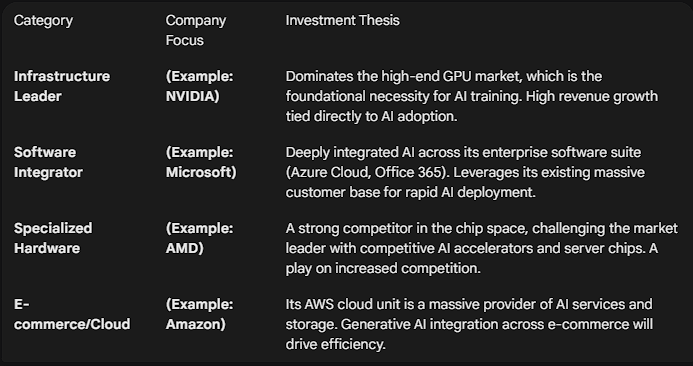
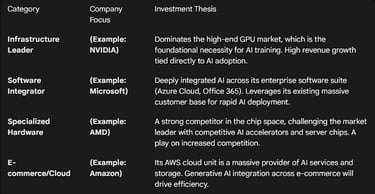

Important Note: When researching individual AI stocks, prioritize companies with clear profitability, high switching costs for customers, and a strong balance sheet. Avoid companies whose only selling point is the word "AI" without a proven product.
3. Strategy 2: AI ETFs for Diversified Investment
For beginners or those seeking lower risk, AI ETFs (Exchange-Traded Funds) provide instant diversification across dozens of companies, minimizing the risk of a single stock failing.
Broad-Based AI ETF (Example: BOTZ, ARKQ): These funds typically hold a mix of software, hardware, and robotics companies involved in Artificial Intelligence. They provide a one-click solution to gain exposure to the entire sector.
Thematic ETF (Example: A specialized Semiconductor ETF): These funds focus narrowly on a specific, critical subsector, like the chips that power AI. They offer higher exposure to the "picks and shovels" of the AI gold rush.
Before investing in AI ETFs, always check the expense ratio (the fund's annual fee) on financial news sites like Morningstar to ensure you are not overpaying for management.
4. Strategy 3: The "Picks and Shovels" Approach (Indirect Investing)
This indirect strategy focuses on the companies that supply the basic necessities for the AI boom, regardless of which specific AI startup wins.
The Power Utility Companies: AI data centers consume massive amounts of electricity. Utilities and clean energy providers supplying power to new data centers are essentially guaranteed growth.
The Cooling/Infrastructure Suppliers: Data centers generate immense heat. Companies specializing in advanced cooling systems or specialized construction for large data centers are indirect, low-risk ways to profit.
5. Risk Management and Long-Term Outlook
Investing in AI is a high-growth field, meaning volatility is inherent. For a successful smart money management strategy, keep these principles in mind:
Diversification is Key: Do not dedicate more than 5-10% of your total portfolio to a high-growth thematic sector like AI. The rest should be in broader market index funds.
Time Horizon: AI is a long-term trend. Be prepared to hold these investments for at least five to ten years to ride out the inevitable market corrections.
Avoid Leverage: Never invest in highly volatile tech stocks using borrowed money. Maintain a solid Emergency Fund, Emergency Fund: Why You Need It and How to Build One Step by Step to avoid forced selling during downturns.


💡 Your AI Investment Portfolio in 2025
The wave of Artificial Intelligence is here, and it offers unparalleled opportunities for building real wealth and potentially accelerating your passive income goals Passive Income Ideas for Beginners. By strategically allocating funds across high-growth AI stocks, reliable AI ETFs, and the indirect infrastructure enablers, you position your portfolio to be a true beneficiary of this historic technological shift. Start small, stay diversified, and let the future of AI work for you.
Contact us
Reach out for questions or support
Phone
journeytomillion07@gmail.com
+55 11 98828-7504
© 2025. All rights reserved.

